
Showing posts with label A to Z Blogging Challenge. Show all posts
Showing posts with label A to Z Blogging Challenge. Show all posts
Monday, October 3, 2011
I've been splattered on a Graffiti wall!
Sheri Larsen of Writers' Ally has graciously let me visit her graffiti wall. Come on over and see what all the splat is about!


Wednesday, August 31, 2011
The Blogtour Continues: I'm over here today--->
Hi all! I'm back on the trail again -- or would that be the ice? Not sure of the correct metaphor right now, but you get what I mean with the title of this entry.
Anyway, please, please, please come visit me over at Laynie King's blog today. I'm answering questions about writing. I hope you'll come visit. You could win a free signed copy of Saving Redwind...:)
Hope to see you over there!
Anyway, please, please, please come visit me over at Laynie King's blog today. I'm answering questions about writing. I hope you'll come visit. You could win a free signed copy of Saving Redwind...:)
Hope to see you over there!
Tuesday, May 3, 2011
Reflections on A to Z Challenge
I can't remember how I stumbled upon Alex Cavanaugh's blog and saw the A to Z Challenge. I saw the seemingly innocent A to Z badge and thought, this might be fun. I signed up. I was in the late 700's on the list and was shocked when the list grew to over 1,200 bloggers. How could I make it to each and everyone of them and still have time to blog, write, work, eat, sleep, motherly duties? I discovered the Surprise Me! button and started using that. What shocked me was that the Surprise Me! button would sometimes take me to that same blog over and over. I'd read, leave a comment, and then move on.
I know I didn't visit all 1200+ blogs. There was no way for me to considering that I only gave myself 15-20 minutes each day to visit the blogs. I don't have a lot of time and I had never gotten into the habit of blogging or visiting blogs. This challenge exposed me to a world of blogs I had no idea of, and I hope to be able to keep up with most of those that I've joined. I may not be able to visit every day, but I hope to at least once a week.
I have to admit that I visited many blogs that I didn't leave a comment. If the post was paragraphs and paragraphs and paragraphs long, I skipped it. There were other blogs that I visited that I had no clue what they were about - gaming-type sites, so I looked them over and then passed them by. Why join a site just to join? Sure, I'd love to have tons and tons of followers, but if they aren't really interested in what I'm talking about, well..I don't want to join a blog that doesn't interest me.
What I especially liked about the challenge was meeting other bloggers and my commitment to blog each day. I don't know that I can keep that up, especially since I'm now working on a new project. But, I will try. I have to admit that I'm a little addicted to blogging and visiting.
When's the next challenge? I think I might want to try again!
I know I didn't visit all 1200+ blogs. There was no way for me to considering that I only gave myself 15-20 minutes each day to visit the blogs. I don't have a lot of time and I had never gotten into the habit of blogging or visiting blogs. This challenge exposed me to a world of blogs I had no idea of, and I hope to be able to keep up with most of those that I've joined. I may not be able to visit every day, but I hope to at least once a week.
I have to admit that I visited many blogs that I didn't leave a comment. If the post was paragraphs and paragraphs and paragraphs long, I skipped it. There were other blogs that I visited that I had no clue what they were about - gaming-type sites, so I looked them over and then passed them by. Why join a site just to join? Sure, I'd love to have tons and tons of followers, but if they aren't really interested in what I'm talking about, well..I don't want to join a blog that doesn't interest me.
What I especially liked about the challenge was meeting other bloggers and my commitment to blog each day. I don't know that I can keep that up, especially since I'm now working on a new project. But, I will try. I have to admit that I'm a little addicted to blogging and visiting.
When's the next challenge? I think I might want to try again!
Saturday, April 30, 2011
Z is for ... Zamboni
Well, of course it is, Kris, you say to yourself. You're a huge hockey fan and it only makes sense that you'd talk about the zam.
Sure, but have you ever thought of the zam as a metaphor for editing? Probably not.
What does a zamboni do? Thanks to Wikipedia, here's the "technical" definition: An ice resurfacer is a truck-like vehicle or smaller device used to clean and smooth the surface of an ice rink.
If the ice is your manuscript and the zam is your editing skills, you're cleaning and smoothing the surface of your manuscript. Pretty cool, huh?
Maybe not to you, but I thought it was.
I can't believe the A to Z Challenge is done today! Thanks to all the new followers. I'm so glad to have met you and I hope you'll continue to skate by here now and again. I promise not to talk hockey all of the time! And, I'll do my best to visit all of those blogs I joined throughout this month. I'm so happy to have stumbled upon so many cool blogs! It's about time I got myself out of my own rink and into some other "rinks".
Sure, but have you ever thought of the zam as a metaphor for editing? Probably not.
What does a zamboni do? Thanks to Wikipedia, here's the "technical" definition: An ice resurfacer is a truck-like vehicle or smaller device used to clean and smooth the surface of an ice rink.
If the ice is your manuscript and the zam is your editing skills, you're cleaning and smoothing the surface of your manuscript. Pretty cool, huh?
Maybe not to you, but I thought it was.
I can't believe the A to Z Challenge is done today! Thanks to all the new followers. I'm so glad to have met you and I hope you'll continue to skate by here now and again. I promise not to talk hockey all of the time! And, I'll do my best to visit all of those blogs I joined throughout this month. I'm so happy to have stumbled upon so many cool blogs! It's about time I got myself out of my own rink and into some other "rinks".
Friday, April 29, 2011
Y is for ... Yahoo!
I think writing these days is even easier. With search engines such as Yahoo!, writers can do research in their homes, coffee shops, or even on the beach (if they have wifi). Writers don't have to trudge through books or take road trips to learn about other cultures or places. With the internet at our fingertips, we can discover all sorts of information without every leaving our homes or our pjs.
I've used the internet to research jerseys, exact sizing of ice rinks, hockey practice drills, even brain tumors and hospice care.
What have you researched on the internet for your writing, or are you a hands-on type of writer?
I've used the internet to research jerseys, exact sizing of ice rinks, hockey practice drills, even brain tumors and hospice care.
What have you researched on the internet for your writing, or are you a hands-on type of writer?
Thursday, April 28, 2011
X is for ... Xtreme tiredness
We are very tired today. Late night hockey game last night and then everyone was too revved up to get to bed, including the new puppy. So today, I'm taking a much needed break. See you tomorrow with Y!
Wednesday, April 27, 2011
W is for ... Who, What, Where, When, and Howe
Thanks to my hubby for the idea for this post. I could've talked about the Whalers (Plymouth's OHL team), but this goes much better along with writing. The Howe is an inside joke if you're a hockey fan - I didn't spell it wrong!
Remember back in school when we had to ask ourselves the five questions- who, what, where, when, and how? These questions still apply to reading and writing in a writer's life. We need to know:
Remember back in school when we had to ask ourselves the five questions- who, what, where, when, and how? These questions still apply to reading and writing in a writer's life. We need to know:
- Who are the characters, main and secondary?
- What's the story problem/question?
- Where is the story taking place?
- When is the story taking place?
- How is the character going to overcome the What?
Tuesday, April 26, 2011
V is for ... Voracious
Voracious: having a huge appetite; excessively eager (thanks to Merriam-Webster online dictionary).
I've often referred to myself as a voracious reader. I've been known to be reading 3 or 4 books at a time. That was before I became an editor. Now, I'm lucky to read one book. I used to plow through a book, no matter how bad the writing or if I'd already figured out the plot half way through. I felt a sort of loyalty to the author to finish reading.
Unfortunately, I do not feel that way anymore.
I get many of my books from the library now. I try to read in multiple genres, and I oftentimes will read debut authors. I don't have the same loyalty to the author now, though. If I'm not entirely captivated by the story by chapter 3, I'm done with it. I sort of feel bad that I've become this type of reader. But I just don't have the time for bad writing.
How about you? Do you continue to read even if the writing is poor or if you've figured the whole thing out?
I've often referred to myself as a voracious reader. I've been known to be reading 3 or 4 books at a time. That was before I became an editor. Now, I'm lucky to read one book. I used to plow through a book, no matter how bad the writing or if I'd already figured out the plot half way through. I felt a sort of loyalty to the author to finish reading.
Unfortunately, I do not feel that way anymore.
I get many of my books from the library now. I try to read in multiple genres, and I oftentimes will read debut authors. I don't have the same loyalty to the author now, though. If I'm not entirely captivated by the story by chapter 3, I'm done with it. I sort of feel bad that I've become this type of reader. But I just don't have the time for bad writing.
How about you? Do you continue to read even if the writing is poor or if you've figured the whole thing out?
Monday, April 25, 2011
U is for ... Unique
Authors know that they have to write a good story in order to sell. But there also needs to be something unique about their story idea. I've read that there are no new stories, just different (unique) takes on the same one. Take Romeo and Juliet. How many other books have been written with this same or similar storyline? Here are a few that I can think of quickly:
- Twilight
- West Side Story
- Wuthering Heights
Saturday, April 23, 2011
T is for ... Time-frame
Another important aspect of writing is determining how long the story will last. It could be a day, a week, a month, a year, or several years. Writing for young kids, though, I think the time-frame should be not longer than a year. Most of the stories I write take place from one week to several months. Most important, though, is that the time-frame should match the storyline. Can a young boy save an entire world in one day? I'm not sure if that's physically possible depending upon what needs to be done. But if the writer makes the events and text seemless, then the reader will believe anything.
What sort of time-frame do you write or like to read?
What sort of time-frame do you write or like to read?
Friday, April 22, 2011
S is for ... Story Question
Okay, I could've done Sports, or Social Media, or Sticks (like hockey and lacrosse), but I think the most important one is Story Question.
Without a Story Question, an author really has no basis for their manuscript. This is one of the first things that we teach at our writing workshops - Story Question/Problem. What does the main character expect to achieve by the end of the book? If we pose it as a yes/no question, it seems to make better sense to our participants.
Will the girl escape the vampire or fall in love with him?
Will the boy accept being a wizard and survive his first year at school?
Do you start with a story question/problem?
Without a Story Question, an author really has no basis for their manuscript. This is one of the first things that we teach at our writing workshops - Story Question/Problem. What does the main character expect to achieve by the end of the book? If we pose it as a yes/no question, it seems to make better sense to our participants.
Will the girl escape the vampire or fall in love with him?
Will the boy accept being a wizard and survive his first year at school?
Do you start with a story question/problem?
Thursday, April 21, 2011
R is for ... Realistic Dialogue
I was afraid that I had used Dialogue for D, but I'm glad to see that I didn't. Today I'd like to talk a little bit about using Realistic dialogue while writing.
As an editor, I work on a lot of books for kids at our press. I've noticed that many of the authors write like how they speak. This is a problem because their audience is not 30+ years old. In order for that reader to understand and identify with the characters in their children's book, the characters need to sound like kids.
I have this same problem. Or, at least I did. I've become keenly aware of the words I use to make sure that they are representative of how kids speak, think, act, etc. The last thing you want an editor to say is, "Great story, can't connect with the author voice." Which means, the dialogue and narrative are not realistic for the storyline/age.
An eight-year-old boy is not going to say the following,
"Excuse me, madam, but could you please pass to me those scrumptious looking PopTarts?" Correct?
Most likely he'd say, "Hey! Can you give me those PopTarts? Uh...please?"
Have you read any kids books that seem like they've been written from an adult's pov, rather than the kid's because of the unrealistic dialogue used?
As an editor, I work on a lot of books for kids at our press. I've noticed that many of the authors write like how they speak. This is a problem because their audience is not 30+ years old. In order for that reader to understand and identify with the characters in their children's book, the characters need to sound like kids.
I have this same problem. Or, at least I did. I've become keenly aware of the words I use to make sure that they are representative of how kids speak, think, act, etc. The last thing you want an editor to say is, "Great story, can't connect with the author voice." Which means, the dialogue and narrative are not realistic for the storyline/age.
An eight-year-old boy is not going to say the following,
"Excuse me, madam, but could you please pass to me those scrumptious looking PopTarts?" Correct?
Most likely he'd say, "Hey! Can you give me those PopTarts? Uh...please?"
Have you read any kids books that seem like they've been written from an adult's pov, rather than the kid's because of the unrealistic dialogue used?
Wednesday, April 20, 2011
Q is for ... Quandary
I'm in a quandary today because I'm not exactly sure what to write for Q. It could be because of these two:
 Should I play or should I write? Jack, the older dog, isn't too sure about Hank, the new puppy. Hopefully he'll get used to Hank soon.
I'm also in a Quandary because this isn't working:

Now my cold is pretty much full blown and I feel like I need to sleep 10 hours a day, plus my regular nighttime sleeping. Should I sleep or should I write?
And, it's Spring Break in my house, but we aren't here, so...
 Should I hop a plane to a sunny local or should I write?
I think if that were my real quandary, there'd be no question which one I'd pick....write at the sunny local of course!
What's your quandary today?

I'm also in a Quandary because this isn't working:

Now my cold is pretty much full blown and I feel like I need to sleep 10 hours a day, plus my regular nighttime sleeping. Should I sleep or should I write?
And, it's Spring Break in my house, but we aren't here, so...

I think if that were my real quandary, there'd be no question which one I'd pick....write at the sunny local of course!
What's your quandary today?
Tuesday, April 19, 2011
P is for ... Playoffs
I can't write about hockey and not include something else about playoffs. Yesterday, we all learned about how the octopus came to be a part of Red Wing playoffs. Today we'll take a closer look at how the Stanley Cup Playoffs are set up. Once again, thanks to Wikipedia for the invaluable information:
The Stanley Cup playoffs is an elimination tournament in the National Hockey League consisting of four rounds of best-of-seven series. The first three rounds determine which team from each conference will advance to the final round, dubbed the Stanley Cup Finals.
The first round of the playoffs, or Conference Quarterfinals, consists of four match-ups in each conference, based on the seedings (# 1 vs. # 8, # 2 vs. # 7, # 3 vs. # 6, and # 4 vs. # 5). In the second round, or Conference Semifinals, the top remaining conference seed plays against the lowest remaining seed, and the other two remaining conference teams pair off (unlike the NBA, for example, where the 1–8 winner always plays the 4–5 winner, regardless of who wins). In the third round, the Conference Finals, the two remaining teams in each conference play each other, with the conference champions proceeding to the Stanley Cup Final.
For the first three rounds, the higher-seeded team has home-ice advantage (regardless of point record). In the Stanley Cup Final, it goes to the team with the better regular season record. The team with home-ice advantage hosts Games 1, 2, 5 and 7, while the opponent hosts Games 3, 4 and 6 (Games 5–7 are played "if necessary").
Have you ever been to a final championship game? It doesn't have to be a Stanley Cup game, but any type of game.
The Stanley Cup playoffs is an elimination tournament in the National Hockey League consisting of four rounds of best-of-seven series. The first three rounds determine which team from each conference will advance to the final round, dubbed the Stanley Cup Finals.
The first round of the playoffs, or Conference Quarterfinals, consists of four match-ups in each conference, based on the seedings (# 1 vs. # 8, # 2 vs. # 7, # 3 vs. # 6, and # 4 vs. # 5). In the second round, or Conference Semifinals, the top remaining conference seed plays against the lowest remaining seed, and the other two remaining conference teams pair off (unlike the NBA, for example, where the 1–8 winner always plays the 4–5 winner, regardless of who wins). In the third round, the Conference Finals, the two remaining teams in each conference play each other, with the conference champions proceeding to the Stanley Cup Final.
For the first three rounds, the higher-seeded team has home-ice advantage (regardless of point record). In the Stanley Cup Final, it goes to the team with the better regular season record. The team with home-ice advantage hosts Games 1, 2, 5 and 7, while the opponent hosts Games 3, 4 and 6 (Games 5–7 are played "if necessary").
Have you ever been to a final championship game? It doesn't have to be a Stanley Cup game, but any type of game.
Monday, April 18, 2011
O is for ... Octopus
Back to my hockey theme, but not about writing. Thanks to Wikipedia, here's what we fans in Detroit already know during Red Wings playoffs:
The Legend of the Octopus is a sports tradition during Detroit Red Wings home playoff games where octopodes are thrown onto the ice surface. The origins of the activity go back to the 1952 playoffs, when a National Hockey League team played two best-of-seven series to capture the Stanley Cup. The octopus, having eight arms, symbolized the number of playoff wins necessary for the Red Wings to win the Stanley Cup. The practice started April 15, 1952 when Pete and Jerry Cusimano, brothers and storeowners in Detroit's Eastern Market, hurled an octopus into the rink of The Old Red Barn.[1] The team swept the Toronto Maple Leafs and Montreal Canadiens en route to winning the championship, as well as winning two of the next three championships.
Since 1952 the practice has persisted with each passing year. In one 1995 game, fans threw 36 octopuses, including a specimen weighing 38 pounds (17 kg).[2] The Red Wings' unofficial mascot is a purple octopus named Al, and during playoff runs two of these mascots are also hung from the rafters of the Joe Louis Arena, symbolizing the 16 wins now needed to win the Stanley Cup. It has become such an accepted part of the team's lore, that fans have developed what is considered proper etiquette and technique for throwing an octopus onto the ice.
Do you have any sports traditions in your town?
The Legend of the Octopus is a sports tradition during Detroit Red Wings home playoff games where octopodes are thrown onto the ice surface. The origins of the activity go back to the 1952 playoffs, when a National Hockey League team played two best-of-seven series to capture the Stanley Cup. The octopus, having eight arms, symbolized the number of playoff wins necessary for the Red Wings to win the Stanley Cup. The practice started April 15, 1952 when Pete and Jerry Cusimano, brothers and storeowners in Detroit's Eastern Market, hurled an octopus into the rink of The Old Red Barn.[1] The team swept the Toronto Maple Leafs and Montreal Canadiens en route to winning the championship, as well as winning two of the next three championships.
Since 1952 the practice has persisted with each passing year. In one 1995 game, fans threw 36 octopuses, including a specimen weighing 38 pounds (17 kg).[2] The Red Wings' unofficial mascot is a purple octopus named Al, and during playoff runs two of these mascots are also hung from the rafters of the Joe Louis Arena, symbolizing the 16 wins now needed to win the Stanley Cup. It has become such an accepted part of the team's lore, that fans have developed what is considered proper etiquette and technique for throwing an octopus onto the ice.
Do you have any sports traditions in your town?
Saturday, April 16, 2011
N is for ... Nemesis
Nemesis (noun): someone or something that continues to oppose you and cannot easily be defeated. Thanks to Macmillan Dictionary Online for that definition.
Almost all stories have a nemesis, that bad guy or thing that our beloved main character can't seem to overcome, get away from, or defeat. One of the most famous of all nemesis of young adult books, I think, is He-Who-Must-Not-Be-Named, aka Lord Voldemort of the Harry Potter series.
The nemesis (either tangible or intangible) is something that the author needs to take into account when starting a story. In writing workshops, I teach that each story should have a story question/problem which should be answered by the end of the book. If a series is written, there can be an underlying problem throughout all of the books which would ultimately be answered in the last book - look at Deathly Hallows in the HP series. HP's problem (nemesis) is finally taken care of.
But what if the character's nemesis isn't a person? What if it is something out of their control? Both Willy Wonka and Oliver Twist use poverty as a nemesis. Think about it? Would the stories have had an impact if both characters had come from the middle-class?
Which nemesis is your favorite?
Almost all stories have a nemesis, that bad guy or thing that our beloved main character can't seem to overcome, get away from, or defeat. One of the most famous of all nemesis of young adult books, I think, is He-Who-Must-Not-Be-Named, aka Lord Voldemort of the Harry Potter series.
The nemesis (either tangible or intangible) is something that the author needs to take into account when starting a story. In writing workshops, I teach that each story should have a story question/problem which should be answered by the end of the book. If a series is written, there can be an underlying problem throughout all of the books which would ultimately be answered in the last book - look at Deathly Hallows in the HP series. HP's problem (nemesis) is finally taken care of.
But what if the character's nemesis isn't a person? What if it is something out of their control? Both Willy Wonka and Oliver Twist use poverty as a nemesis. Think about it? Would the stories have had an impact if both characters had come from the middle-class?
Which nemesis is your favorite?
Friday, April 15, 2011
M is for ... Music
I have to write with some noise in the background. It can't be the bickering of my kids, the TV at 40 on the volume level, or the dog barking. It can't even be the kids playing mini-sticks or video games. I need music. With each new project, I create a playlist that reminds me of the characters and the struggle in the story. I love creating new playlists and will oftentimes listen to it even when I'm not writing to help keep me in that world.
What quirky things do you do when you write or start a new project?
What quirky things do you do when you write or start a new project?
Thursday, April 14, 2011
L is for ... Laugh
Who doesn't like a joke? What about a funny TV show or movie? I think the same for books that have funny characters. You just can't put the book down because you are so engaged with the storyline and the characters. I love when I laugh out loud while reading and my kids say, "What's so funny?"
I think authors who are able to convey those happy emotions are very talented. Susan Elizabeth Phillips comes to mind, as well as Sophie Kinsella, and Emily Giffin.
What book has made you laugh out loud?
I think authors who are able to convey those happy emotions are very talented. Susan Elizabeth Phillips comes to mind, as well as Sophie Kinsella, and Emily Giffin.
What book has made you laugh out loud?
Wednesday, April 13, 2011
K is for ... Kooky
Most stories have a kooky character in them. Usually it isn't the main character, but a pretty significant secondary character. When I say "kooky", I don't necessarily mean "funny."
In Neil Gaiman's The Graveyard Book, Silas plays this part. He's mysterious, yet all-knowing. It seems as if he watches over Bod as his duty, yet he generally cares about Bod. He's odd in that he's not the typical ghost who lives in the cemetery - he can leave, where the other ghosts are stuck inside the gates.
Bod is only one example of a kooky character. Can you think of more?
In Neil Gaiman's The Graveyard Book, Silas plays this part. He's mysterious, yet all-knowing. It seems as if he watches over Bod as his duty, yet he generally cares about Bod. He's odd in that he's not the typical ghost who lives in the cemetery - he can leave, where the other ghosts are stuck inside the gates.
Bod is only one example of a kooky character. Can you think of more?
Tuesday, April 12, 2011
J is for ... Jumangi

Jumanji was one of the stories that made me realize it's okay to mix fact and fiction. Well, so did this one:
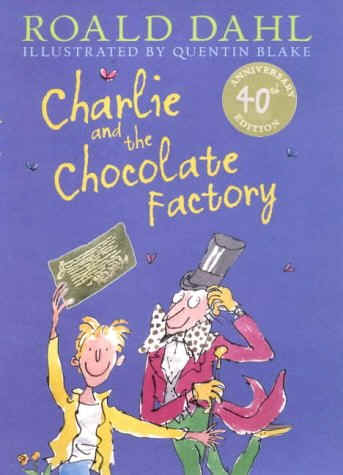
What book inspired you to become a writer?
Subscribe to:
Posts (Atom)


